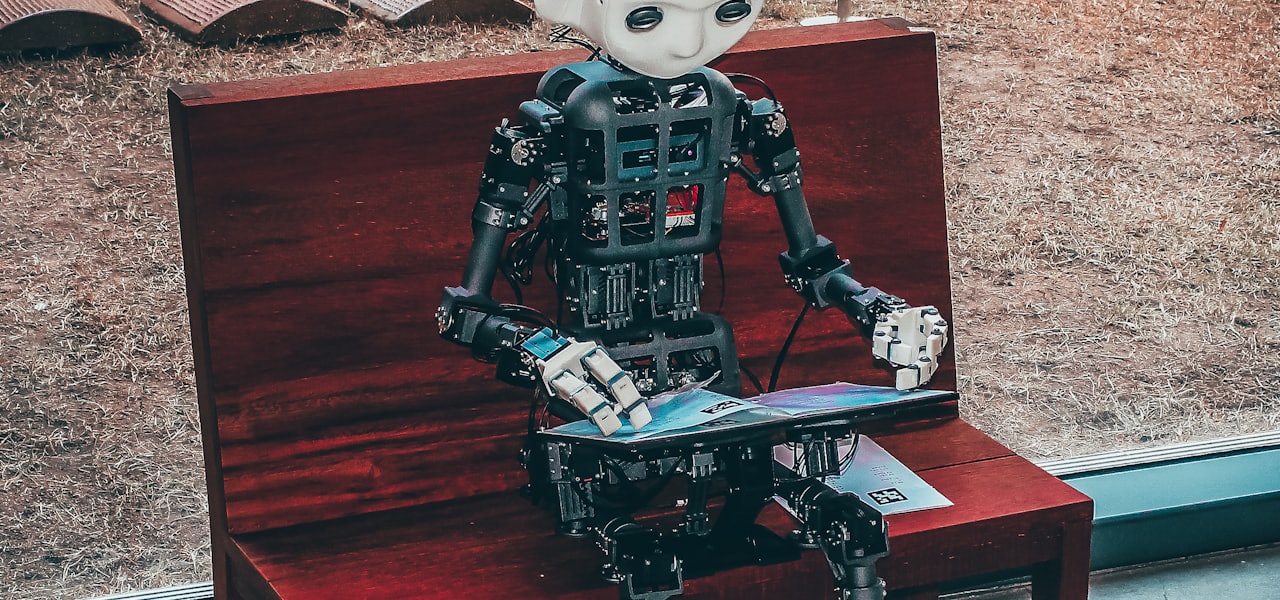
Yann André Le Cun ( lə-KUN; French: [ləkœ̃]; usually spelled LeCun; born 8 July 1960) is a French-American computer scientist working in the fields of artificial intelligence, machine learning, computer vision, robotics and image compression. He is the Jacob T. Schwartz Professor of Computer Science at the Courant Institute of Mathematical Sciences at New York University. He served as Chief AI Scientist at Meta Platforms before co-founding Advanced Machine Intelligence Labs in December 2025. He is well known for his work on optical character recognition and computer vision using convolutional neural networks (CNNs). He is also one of the main creators of the DjVu image compression technology, alongside Léon Bottou and Patrick Haffner. He co-developed the Lush programming language with Léon Bottou. In 2018, LeCun, Yoshua Bengio, and Geoffrey Hinton received the Turing Award from the Association for Computing Machinery (ACM) for their work on deep learning. LeCun, Bengio, and Hinton, and occasionally Jürgen Schmidhuber, are sometimes referred to as the "Godfathers of AI" and "Godfathers of Deep Learning". == Early life and education == Yann André Le Cun was born on 8 July 1960 at Soisy-sous-Montmorency, in the suburbs of Paris. His surname, Le Cun, derives from the old Breton form Le Cunff and originates from the region of Guingamp in northern Brittany. Yann is the Breton form of Jean, the French form of John. He received a Diplôme d'Ingénieur from the ESIEE Paris in 1983 and a PhD in computer science from Université Pierre et Marie Curie (now Sorbonne University) in 1987, during which he proposed an early form of backpropagation, an algorithm crucial for enabling neural networks to learn. Before joining AT&T, LeCun was a postdoctoral researcher for a year, starting in 1987, supervised by Geoffrey Hinton at the University of Toronto. LeCun has three sons, and his brother is employed by Google. He has American citizenship. == Career and research == LeCun's career has been spent primarily at Bell Labs, New York University and Meta Platforms, Inc. === Bell Labs === In 1988, LeCun joined the Adaptive Systems Research Department at AT&T Bell Laboratories in Holmdel, New Jersey, United States, headed by Lawrence D. Jackel, where he developed a number of new machine learning methods, such as a biologically inspired model of image recognition called convolutional neural networks (LeNet), the "Optimal Brain Damage" regularization methods, and the Graph Transformer Networks method (similar to conditional random field), which he applied to handwriting recognition and Optical character recognition (OCR). The bank check recognition system that he helped develop was widely deployed by NCR and other companies. In 1996, he joined AT&T Labs-Research as head of the Image Processing Research Department, which was part of Lawrence Rabiner's Speech and Image Processing Research Lab, and worked primarily on the DjVu image compression technology, a format designed for efficient distribution of scanned documents, and used by the Internet Archive to provide access to digitized texts. His collaborators at AT&T include Léon Bottou and Vladimir Vapnik. === New York University === After a brief tenure as a fellow of NEC Research Institute, LeCun joined New York University in 2003, where he is Jacob T. Schwartz Chaired Professor of Computer Science and Neural Science at the Courant Institute of Mathematical Sciences and the Center for Neural Science. At NYU, he has worked primarily on energy-based models for supervised and unsupervised learning, feature learning for object recognition in computer vision, and mobile robotics. In 2012, he became the founding director of the NYU Center for Data Science. On 9 December 2013, LeCun became the first director of Meta AI Research in New York City and in early 2014 stepped down from the NYU–CDS directorship. In 2013, he and Yoshua Bengio co-founded the International Conference on Learning Representations, which adopted a post-publication open review process he previously advocated on his website. He was the chair and organiser of the "Learning Workshop" held every year between 1986 and 2012 in Snowbird, Utah. He is a member of the Science Advisory Board of the Institute for Pure and Applied Mathematics at UCLA. He is the co-director of the Learning in Machines and Brain research program (formerly Neural Computation & Adaptive Perception) of CIFAR. In 2016, he was the visiting professor of computer science on the Chaire Annuelle Informatique et Sciences Numériques at Collège de France in Paris, where he presented the leçon inaugurale (inaugural lecture). In 2023, he was named as the inaugural Jacob T. Schwartz Chaired Professor in Computer Science at NYU's Courant Institute. LeCun is also a scientific advisor to French research group Kyutai which is being funded by Xavier Niel, Rodolphe Saadé, Eric Schmidt, and others. === Meta Platforms === LeCun joined Facebook (now Meta Platforms) in 2013 as chief AI scientist and led the company's AI research laboratory, FAIR. === AMI Labs === On 19 November 2025, LeCun confirmed that he would be leaving Meta after ten years to found his own company focused on world-model architectures and human-like artificial intelligence he calls superintelligence. The company he founded, Advanced Machine Intelligence Labs (or AMI Labs), is run by CEO Alex LeBrun, with LeCun serving as Executive Chair. This venture is focused on building AI "world models": systems that learn to understand the physical world's structure and dynamics rather than just predict text like large language models. In March 2026, AMI announced it had raised $1.03 billion in funding at a $3.5 billion pre-money valuation. The funding round was co-led by investors including Cathay Innovation, Greycroft, Hiro Capital, HV Capital and Bezos Expeditions. In January 2026, LeCun became founding chair of the Technical Research Board of Logical Intelligence, an AI company developing energy-based (EBM) reasoning systems. == Honours and awards == LeCun is a member of the US National Academy of Sciences, National Academy of Engineering and the French Académie des Sciences. He has received honorary doctorates from Instituto Politécnico Nacional (IPN) in Mexico City in 2016, from EPFL in 2018, from Université Côte d'Azur in 2021, from Università di Siena in 2023, and from Hong Kong University of Science and Technology in 2023. In 2014, he received the IEEE Neural Network Pioneer Award and in 2015, the PAMI Distinguished Researcher Award. In 2018, LeCun was awarded the IRI Medal, established by the Industrial Research Institute (IRI), and the Harold Pender Award, given by the University of Pennsylvania. In 2019, he received the Golden Plate Award of the American Academy of Achievement. In March 2019, LeCun won the 2018 Turing Award, sharing it with Yoshua Bengio and Geoffrey Hinton. In 2022, he received the Princess of Asturias Award in the category "Scientific Research", along with Yoshua Bengio, Geoffrey Hinton and Demis Hassabis. In 2023, the President of France made him a Chevalier (Knight) of the French Legion of Honour. During the World Economic Forum (WEF) 2024 in Davos, he received the Global Swiss AI Award 2023. The same year, he received the grand prize of the VinFuture Prize alongside Yoshua Bengio, Jensen Huang, Geoffrey Hinton, and Fei-Fei Li for their groundbreaking contributions to neural networks and deep learning algorithms. In 2025 he was awarded the Queen Elizabeth Prize for Engineering jointly with Yoshua Bengio, Bill Dally, Geoffrey E. Hinton, John Hopfield, Jensen Huang and Fei-Fei Li.
Smart environment
Smart environments link computers and other smart devices to everyday settings and tasks. Smart environments include smart homes, smart cities, and smart manufacturing. == Introduction == Smart environments are an extension of pervasive computing. According to Mark Weiser, pervasive computing promotes the idea of a world that is connected to sensors and computers. These sensors and computers are integrated with everyday objects in peoples' lives and are connected through networks. == Definition == Cook and Das, define a smart environment as "a small world where different kinds of smart devices are continuously working to make inhabitants' lives more comfortable." Smart environments aim to satisfy the experience of individuals from every environment, by replacing hazardous work, physical labor, and repetitive tasks with automated agents. Poslad differentiates three different kinds of smart environments for systems, services, and devices: virtual (or distributed) computing environments, physical environments, and human environments, or a hybrid combination of these: Virtual computing environments enable smart devices to access pertinent services anywhere and anytime. Physical environments may be embedded with various smart devices of different types including tags, sensors, and controllers, and have different form factors ranging from nano- to micro- to macro-sized. Human environments: humans, either individually or collectively, inherently form a smart environment for devices. However, humans themselves may be accompanied by smart devices such as mobile phones, use surface-mounted devices (wearable computing), and contain embedded devices (e.g., pacemakers to maintain a healthy heart operation or AR contact lenses) == Features == Smart environments encompass a range of features and services across various domains, including smart homes, smart cities, smart health, and smart factories. Some of the key features of smart environments are: Sensors and Actuators: Smart environments are equipped with an assembly of sensors and actuators that collect data and initiate actions to provide services for the betterment of human life. Interconnected Systems: These environments consist of interconnected systems that enable seamless communication and coordination among various devices and components. Data-Driven Technologies: Smart environments leverage data-driven technologies, such as the Internet of Things (IoT), to obtain information from the physical world, process it, and perform actions accordingly. Efficiency and Sustainability: They are designed to improve efficiency, sustainable practices, and resource management across different settings, such as energy efficiency in smart homes and environmental quality management in smart cities. Diverse Requirements: Different types of smart environments have diverse requirements and technology choices, influencing the processing and utilization of data within a specific environment. == Technologies == Building a smart environment involves technologies of Wireless communication Algorithm design, signal prediction & classification, information theory Multilayered software architecture, Corba, middleware Speech recognition Image processing, image recognition Sensors design, calibration, motion detection, temperature, pressure sensors, accelerometers Semantic Web and knowledge graphs Adaptive control, Kalman filters Computer networking Parallel processing Operating systems == Existing projects == The Aware Home Research Initiative at Georgia Tech "is devoted to the multidisciplinary exploration of emerging technologies and services based in the home" and was launched in 1998 as one of the first "living laboratories." The Mav Home (Managing an Adaptive Versatile Home) project, at UT Arlington, is a smart environment-lab with state-of-the-art algorithms and protocols used to provide a customized, personal environment to the users of this space. The Mav Home project, in addition to providing a safe environment, wants to reduce the energy consumption of the inhabitants. Other projects include House at the MIT Media Lab and many others.
Yun Sing Koh
Yun Sing Koh (born 1978) is a New Zealand computer science academic, and is a full professor at the University of Auckland, specialising in machine learning and artificial intelligence. She is a co-director of the Centre of Machine Learning for Social Good, and the Advanced Machine Learning and Data Analytics Research (MARS) Lab at Auckland. == Academic career == Koh earned a Bachelor of Science with Honours and a Master of Software Engineering at the University of Malaya. She then completed a PhD titled Generating sporadic association rules at the University of Otago in 2007. Koh joined the faculty of the University of Auckland in 2010, rising to full professor. As of 2024, she is director of the Centre of Machine Learning for Social Good at Auckland, alongside Gillian Dobbie and Daniel Wilson, and is director of the Master of AI course at the university. Koh also co-directs the Advanced Machine Learning and Data Analytics Research (MARS) Lab. Koh's research covers machine learning and artificial intelligence. She is especially interested in designing machine learning algorithms for data streams, and has led research using AI systems to identify individual stoats for pest population research. In 2018 she was awarded a Marsden grant for a research project "An Adaptive Predictive System for Life-long Learning on Data Streams", and has been part of three MBIE projects. In 2025 the stoat identification project Koh co-leads with Daniel Wilson was awarded $1 million per annum by the MBIE Smart Ideas fund. Koh was a finalist in the AI in Climate section of the Women in AI Australia and New Zealand Awards in 2022. She was a 2023 Fellow at the United States National Science Foundation-funded Convergence Research (CORE) Institute. Koh has chaired a number of sessions at international conferences on data mining. In March 2026 it was announced that Koh would be a member of the New Zealand Human Rights Commission's Expert Advisory Group on Artificial Intelligence, Emerging Digital Technologies and Human Rights. == Selected works == Philippe Fournier-Viger; Jerry Chun-Wei Lin; Rage Uday Kiran; Yun Sing Koh; Rincy Thomas (2017). "A Survey of Sequential Pattern Mining". Data Science and Pattern Recognition. 1 (1): 54–77. Wikidata Q138719481. Yun Sing Koh; Nathan Rountree; Richard O’Keefe (1 April 2006). "Finding Non-Coincidental Sporadic Rules Using Apriori-Inverse". International Journal of Data Warehousing and Mining (in Ndonga). 2 (2): 38–54. doi:10.4018/JDWM.2006040102. ISSN 1548-3924. Wikidata Q125185222. Russel Pears; Sripirakas Sakthithasan; Yun Sing Koh (11 January 2014). "Detecting concept change in dynamic data streams". Machine Learning. 97 (3): 259–293. doi:10.1007/S10994-013-5433-9. ISSN 1573-0565. Zbl 1319.68186. Wikidata Q125185156. David Tse Jung Huang; Yun Sing Koh; Gillian Dobbie; Russel Pears (December 2014), Detecting Volatility Shift in Data Streams, Institute of Electrical and Electronics Engineers, doi:10.1109/ICDM.2014.50, Wikidata Q125185151 Sidney Tsang; Yun Sing Koh; Gillian Dobbie (2011). "RP-Tree: Rare Pattern Tree Mining". Lecture Notes in Computer Science: 277–288. doi:10.1007/978-3-642-23544-3_21. ISSN 0302-9743. Wikidata Q125185206. Yun Sing Koh; Sri Devi Ravana (24 May 2016). "Unsupervised Rare Pattern Mining". ACM Transactions on Knowledge Discovery from Data. 10 (4): 1–29. doi:10.1145/2898359. ISSN 1556-4681. Wikidata Q125185136. Jack Julian; Yun Sing Koh; Albert Bifet (1 October 2025), Building adaptive knowledge bases for evolving continual learning models (PDF), vol. 1, doi:10.1038/S44387-025-00028-4, Wikidata Q138719496
Jollo
Jollo was an online machine translation service where users could instantly translate texts into 23 languages, request human translations from a community of volunteers around the world, and compare the correctness of several leading machine translation websites. It was discontinued in 2012. == System == Jollo was a free Web 2.0 website that attempted to improve the way in which people translate online through the use of existing machine translation websites and a community of volunteers who correct and rate translations. The system relied on a similar methodology as computer-assisted translation to ensure translation quality, and featured a public translation memory that records past translations. Jollo received some notable media attention, including in The Daily Telegraph. According to the blog KillerStartups, Jollo combined the benefits of the speed of machine translations and human reviews to ensure translation quality. According to Jeffrey Hill from The English Blog, the community features made Jollo an interesting alternative to other online translation services. == Development == The Jollo website was classified as beta. It was developed using LAMP and was praised for its colorful graphics and simple user interface. Jollo offered a simple web-based API that could be used for translations. For example, the URL: http://www.jollo.com/translate.php?st=I%20love%20you&sl=en&tl=zh was used to translate the sentence "I love you" from English into Chinese.
Peter Flach
Pieter "Peter" Adriaan Flach (born 8 April 1961, Sneek) is a Dutch computer scientist and a Professor of Artificial Intelligence in the Department of Computer Science at the University of Bristol. He is author of the acclaimed Simply Logical: Intelligent Reasoning by Example (John Wiley, 1994) and Machine Learning: the Art and Science of Algorithms that Make Sense of Data (Cambridge University Press, 2012). == Education == Flach received an MSc Electrical Engineering from Universiteit Twente in 1987 and a PhD in Computer Science from Tilburg University in 1995. == Research == Flach's research interests are in data mining and machine learning.
AlphaChip (controversy)
The AlphaChip controversy refers to a series of public, scholarly, and legal disputes surrounding a 2021 Nature paper by Google-affiliated researchers. The paper describes an approach to macro placement, a stage of chip floorplanning, based on reinforcement learning (RL), a machine learning method in which a system iteratively improves its decisions by optimizing performance-based reward signals. The primary technical question is whether the new techniques are better than existing (non-AI) techniques. Both internal Google studies and external attempts to replicate the algorithm have failed to show the claimed benefits. No head-to-head comparison is available because the data used in the paper is proprietary, and Google has not released any results from running its algorithm on public benchmarks. This has resulted in considerable skepticism over the paper's claims. In addition, the inability of others (both inside and outside of Google) to replicate the claimed results have sparked concerns about the paper’s methodology, reproducibility, and scientific integrity. The lead researchers of the Nature paper were affiliated with Google Brain, which became part of Google DeepMind, and later spun off into the company Ricursive. == Motivation for research: Macro placement in chip layout == Chip design for modern integrated circuits is a complex, expert-driven process that relies on electronic design automation. It determines the performance of the final chip, and takes weeks or months to complete. Advances that produce better designs, or complete the process faster, are commercially and academically significant. Macro placement is a step during chip design that determines the locations of large circuit components (macros) within a chip. It is followed by detailed placement, which places the far more numerous but much smaller standard cells. Alternatively, mixed-size placement simultaneously places both large macros and millions of small cells, requiring algorithms to handle objects that differ by several orders of magnitude in area and mobility. The number of macros per circuit typically ranges from several to thousands. Wiring must be performed after placement, and the details of this wiring strongly influence the power, performance, and area (PPA) of the completed chip. The full wiring calculation is very resource intensive, so placement tools typically use a proxy cost, a simplified objective function used to guide the placement algorithm during training and evaluation. The faithfulness of the chosen proxy cost to the final objective cost is a critical aspect of placer performance. === State of the art as of 2021 === Chips have been designed since the 1960s, so there were many existing methods as of 2021. Available options included manual design, academic tools, and commercial offerings. Academic methods include combinatorial optimization techniques such as simulated annealing, analytical placement, hierarchical heuristics, and as of 2019 reinforcement learning and broader machine learning techniques.. Existing (non-AI) academic tools for solving the same problem include APlace, NTUplace3, ePlace, RePlace, and DREAMPlace. Commercial EDA vendors also offered automated software tools for floorplanning and mixed-size placement. For instance, as of 2019 Cadence’s Innovus implementation software offered a Concurrent Macro Placer (CMP) feature to automatically place large blocks and standard cells. == The 2021 Nature paper and its claims == In 2021, Nature published a paper under the title “A graph‑placement methodology for fast chip design” co‑authored by 21 Google-affiliated researchers. The paper reported that an RL agent could generate macro placements for integrated circuits "in under six hours" and achieve improvements over human-designed layouts in power, timing performance, and area (PPA), standard chip-quality metrics referring respectively to energy consumption, chip operating speed, and silicon footprint (evaluated after wire routing). It introduced a sequential macro placement algorithm in which macros are placed one at a time instead of optimizing their locations concurrently. At each step, the algorithm selects a location for a single macro on a discretized chip canvas, conditioning its decision on the placements of previously placed macros. This sequential formulation converts macro placement into a long-horizon decision process in which early placement choices constrain later ones. After macro placement, force-directed placement is applied to place standard cells connected to the macros. Deep reinforcement learning is used to train a policy network to place macros by maximizing a reward that reflects final placement quality (for example, wirelength and congestion). Policy learning occurs during self‑play for one or multiple circuit designs. Further placement optimizations refine the overall layout by balancing wirelength, density, and overlap constraints, while treating the macro locations produced by the RL policy as fixed obstacles. The approach relies on pre-training, in which the RL model is first trained on a corpus of prior designs (twenty in the Nature paper) to learn general placement patterns before being fine-tuned on a specific chip. Circuit examples used in the study were parts of proprietary Google TPU designs, called blocks (or floorplan partitions). The paper reported results on five blocks and described the approach as generalizable across chip designs. == Controversy == Soon after the paper's publication, controversy arose over whether the claims were true, whether they were sufficiently proven, and whether academic standards were followed. These controversies arose both within Google and among external academic experts. === Internal dispute at Google and legal proceedings === In 2022, Satrajit Chatterjee, a Google engineer involved in reviewing the AlphaChip work, raised concerns internally and drafted an alternative analysis, (Stronger Baselines) arguing that established methods outperformed the RL approach under fair comparison. In March 2022, Google declined to publish this analysis and terminated Chatterjee's employment. Chatterjee filed a wrongful dismissal lawsuit, alleging that representations related to the AlphaChip research involved fraud and scientific misconduct. According to court documents, Chatterjee's study was conducted "in the context of a large potential Google Cloud deal". He noted that it "would have been unethical to imply that we had revolutionary technology when our tests showed otherwise" and claimed Google was deliberately withholding material information. Furthermore, the committee that reviewed his paper and disapproved its publication was allegedly chaired by subordinates of Jeff Dean, a senior co-author of the Nature paper. Google’s subsequent motion to dismiss was denied, holding that Chatterjee had plausibly alleged retaliation for refusing to engage in conduct he believed would violate state or federal law. === External controversy === The external questions can be summarized in four main points: (a) Are the claims supported by the evidence provided? (b) Did the paper provide enough information to allow the results to be independently reproduced and verified? If so, are the results an improvement over existing academic and commercial tools? (c) Were the comparisons in the paper done fairly and with full disclosure? (d) Were academic standards followed? Each of these is discussed below. ==== Are the claims supported by the evidence provided? ==== The Nature paper described the reduction in design-process time as going from "days or weeks" to "hours", but did not provide per-design time breakdowns or specify the number of engineers, their level of expertise, or the baseline tools and workflow against which this comparison was made. It was also unclear whether the "days or weeks" baseline included time spent on other tasks such as functional design changes. The paper also evaluated the method on fewer benchmarks (five) than is common in the field, and showed mixed results across different evaluation goals While the approach was described as improving circuit area, this claim seems unsupported, as the RL optimization did not alter the overall circuit area, as it adjusted only the locations of fixed-shape non-overlapping circuit components within a fixed rectangular layout boundary. ==== Comparison with existing methods, and replicating the algorithm ==== Because macro placement is largely geometric and its fundamental algorithms are not tied to a specific process node, competing approaches can be evaluated on public benchmarks (tests) across technologies, rather than primarily on proprietary internal designs. This is standard procedure when comparing academic placers, see . In contrast, Google has only reported results only on internal proprietary designs, and as of 2026 has not offered comparisons with prior methods on common benchmarks. Researchers at the University of Califor
Extended affix grammar
In computer science, extended affix grammars (EAGs) are a formal grammar formalism for describing the context free and context sensitive syntax of language, both natural language and programming languages. EAGs are a member of the family of two-level grammars; more specifically, a restriction of Van Wijngaarden grammars with the specific purpose of making parsing feasible. Like Van Wijngaarden grammars, EAGs have hyperrules that form a context-free grammar except in that their nonterminals may have arguments, known as affixes, the possible values of which are supplied by another context-free grammar, the metarules. EAGs were introduced and studied by D.A. Watt in 1974; recognizers were developed at the University of Nijmegen between 1985 and 1995. The EAG compiler developed there will generate either a recogniser, a transducer, a translator, or a syntax directed editor for a language described in the EAG formalism. The formalism is quite similar to Prolog, to the extent that it borrowed its cut operator. EAGs have been used to write grammars of natural languages such as English, Spanish, and Hungarian. The aim was to verify the grammars by making them parse corpora of text (corpus linguistics); hence, parsing had to be sufficiently practical. However, the parse tree explosion problem that ambiguities in natural language tend to produce in this type of approach is worsened for EAGs because each choice of affix value may produce a separate parse, even when several different values are equivalent. The remedy proposed was to switch to the much simpler Affix Grammar over a Finite Lattice (AGFL) instead, in which metagrammars can only produce simple finite languages.